
Michigan Police Blotter
Michigan police blotter records are public documents covering arrests, incidents, and calls for service across all 83 counties. There is no single central database for Michigan police blotter data. Records are held by individual agencies, including city police departments, county sheriffs, and the Michigan State Police. You can access police blotter records through formal Freedom of Information Act requests, online criminal history tools, and state court search systems. This guide covers the main ways to find Michigan police blotter records, what to expect, and how to get the records you need.
Michigan Police Blotter Overview
How Michigan Police Blotter Records Work
Michigan does not maintain a central police blotter database. Each city, county, and state agency keeps its own records. Access runs through the Michigan Freedom of Information Act.
The Michigan Freedom of Information Act, found at MCL 15.231 et seq., Public Act 442 of 1976, gives the public the right to inspect and copy records from any government body. Police blotter data is a public record under this law. You do not need to be a Michigan resident to file a request. You do not need to give a reason. Anyone can ask for incident reports, arrest logs, or police blotter records from any Michigan law enforcement agency. Written requests go directly to the agency that holds the records. Each agency has a FOIA coordinator who handles these requests.
Under MCL 15.233, the public has the right to inspect or receive copies of public records upon a written request. The request must describe the record well enough for the agency to find it. Include the date of the incident, the location, and the names of people involved. Include the incident or case number if you know it. The more detail you give, the faster the process. Michigan law under MCL 15.235 requires a response within 5 business days. An agency can extend this by up to 10 additional business days when unusual circumstances apply. If the agency does not respond in time, the request is treated as denied, and you have the right to appeal or go to circuit court under MCL 15.240. Courts can order records released and may award attorney fees to the prevailing party.
The Michigan State Police website is the main entry point for statewide police records and law enforcement resources in Michigan.
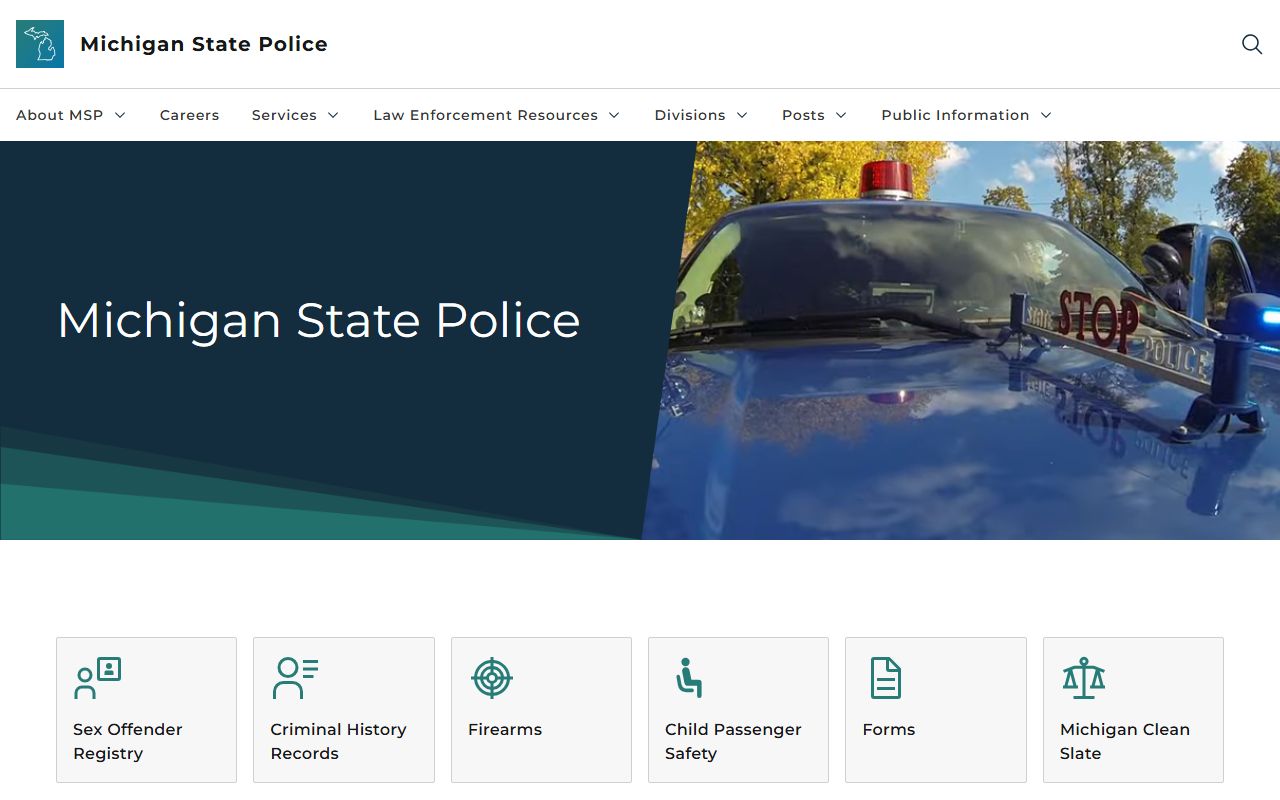
From the MSP site, you can reach ICHAT, the Criminal Justice Information Center, crash report requests, and FOIA contact information for state-level records.
ICHAT and Michigan Criminal History Records
The Michigan State Police runs ICHAT, the Internet Criminal History Access Tool, at apps.michigan.gov/ichat. The fee is $10 per search. You need a full name and date of birth to run a search. ICHAT returns state-level criminal history for the subject. It is open to the public for background purposes.
ICHAT covers felony convictions and serious misdemeanor convictions punishable by more than 93 days. It does not include active warrants, juvenile records, federal convictions, or traffic violations. Records from other states do not appear. Suppressed records are also excluded. If you need out-of-state records or federal cases, contact the FBI or the relevant federal agency directly. For Michigan convictions, ICHAT is the primary public tool. Questions about ICHAT can go to the Criminal Justice Information Center at (517) 241-0606. You can also email MSP-CRD-ACCTHELP@michigan.gov.
The Michigan Courts case search portal is free and covers circuit, district, and appellate court records across the state.
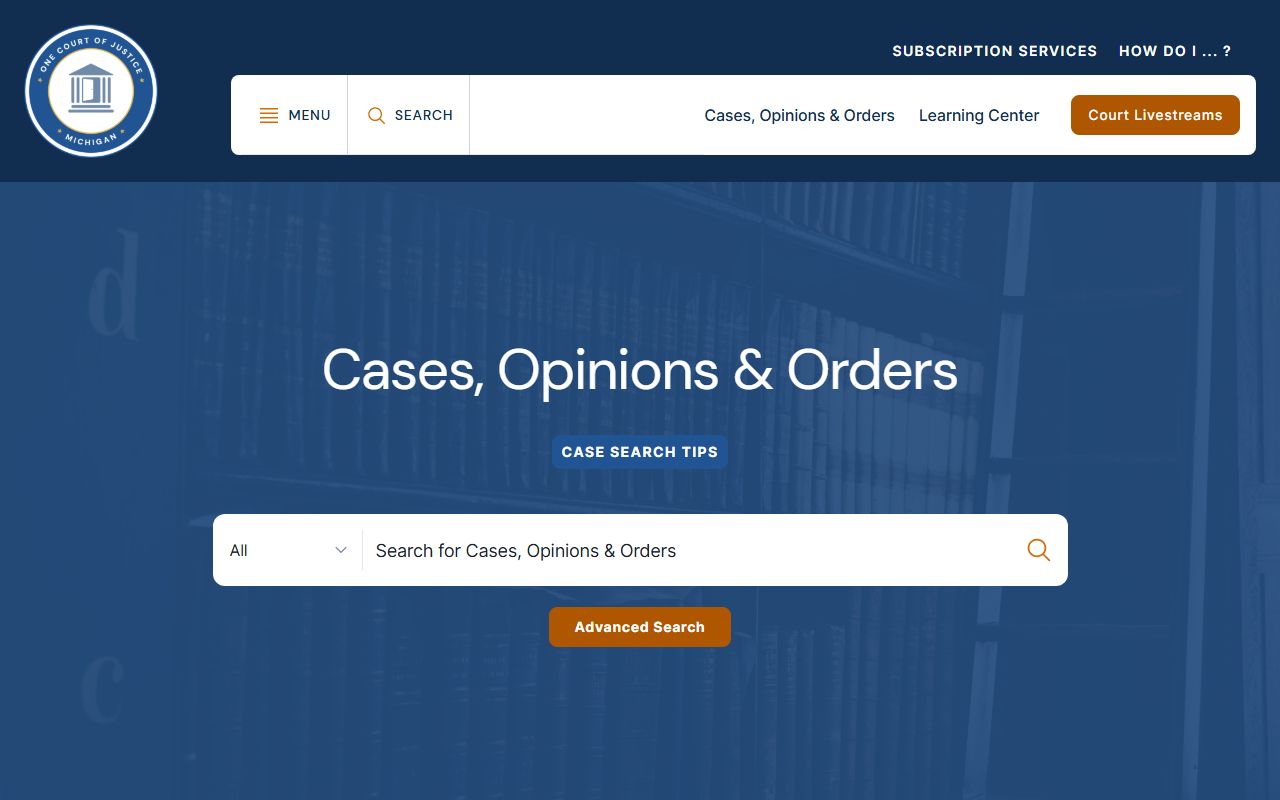
Search by name or case number to find criminal case filings, docket entries, and court dates from participating Michigan courts.
Michigan Courts Case Search shows party names, docket entries, hearing dates, and case status. Not every arrest leads to a court case, and not every court is fully integrated in this system. Records of incidents that were never charged stay only with the arresting agency. For those, you need a direct FOIA request.
How to Request a Michigan Police Blotter
Michigan's FOIA statute, Public Act 442 of 1976, sets the rules for every records request submitted to a state or local government body.
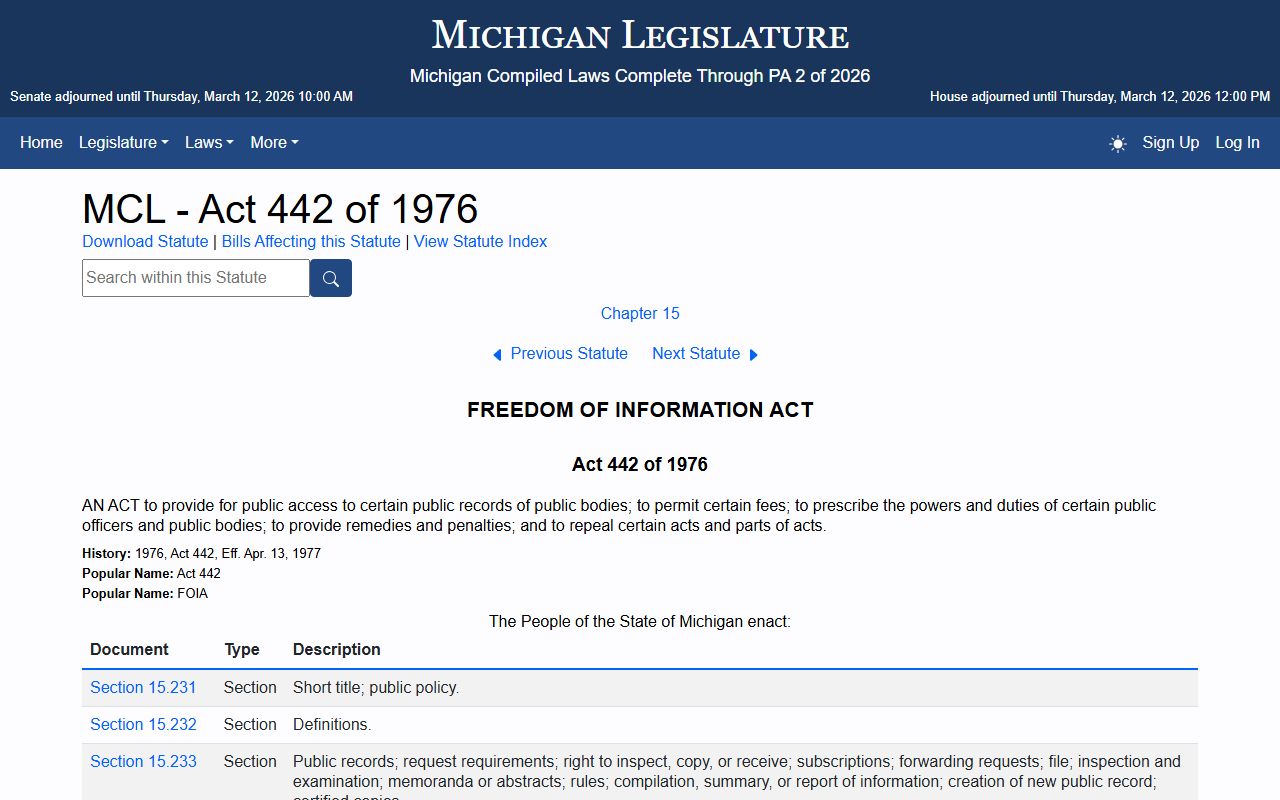
All law enforcement agencies in Michigan must follow the same core requirements when responding to police blotter and incident report requests.
Submit your request in writing. You can deliver it in person, by mail, by email, or by fax. Address it to the FOIA coordinator at the specific agency. Each county sheriff's office and each city police department has its own coordinator. Phone calls do not count as formal FOIA requests under Michigan law.
Include these key details in your request: the incident date, the address or general location, the names of anyone involved, and the incident number if you have it. Under MCL 15.234, agencies can charge for copying and labor. Copying fees are often $0.10 per page for standard paper. Labor is billed at the hourly rate of the lowest-paid employee who can do the work. If the estimate exceeds $50, the agency may ask for a 50% deposit before processing your request.
Fee waivers are available. If you receive public assistance or cannot pay due to indigence, the first $20 is waived with an Affidavit of Indigence. Requestors can also ask for a fee waiver if the disclosure will primarily benefit the general public rather than a private interest.
What Michigan Police Blotter Records Contain
The Michigan Crime Reports database tracks statewide crime statistics collected from law enforcement agencies across all 83 counties in Michigan.
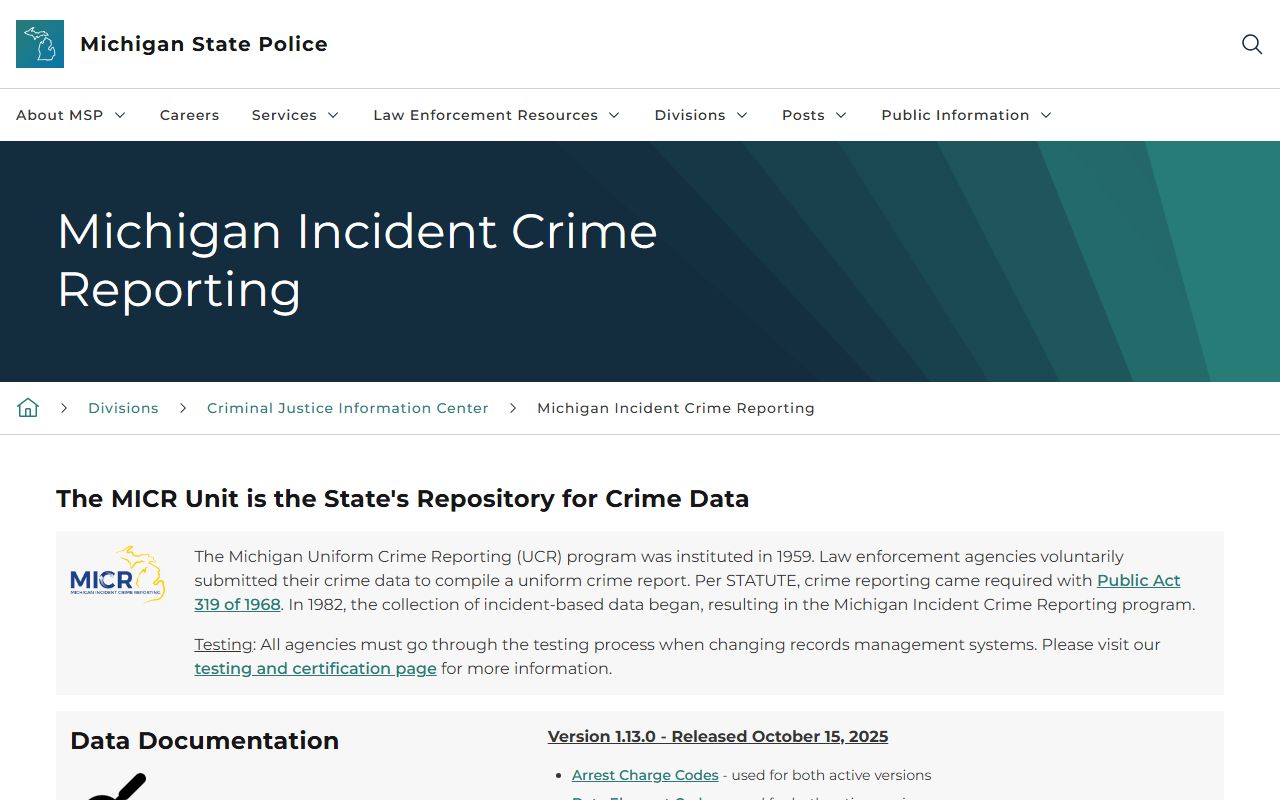
Michigan crime report data goes back to 1997 and includes offense types, arrest counts, and age data broken down by county and jurisdiction.
Michigan police blotter records typically include arrest reports, incident reports, booking records, mug shots, and in some cases 911 audio recordings. Incident reports describe what happened, when, and where. They note the officer's observations and any statements from the scene. Arrest reports show who was booked, on what charges, and when. Mug shots may be released through FOIA unless the agency cites a specific exemption. Dash-cam and body-cam footage may also be requested, though availability varies by department.
The Michigan State Police also handles traffic crash reports under MCL 15.232, which defines what counts as a public record. Traffic reports are separate from police blotter records but fall under the same access rules. Some cities and counties publish daily logs or weekly police blotter summaries on their websites or through local news outlets. These informal reports give a snapshot of recent activity. For the actual case file, you still need a formal FOIA request to the agency.
Michigan FOIA Exemptions for Police Records
The FOIA exemptions statute at MCL 15.243 lists the specific types of records that law enforcement agencies in Michigan can lawfully withhold from the public.
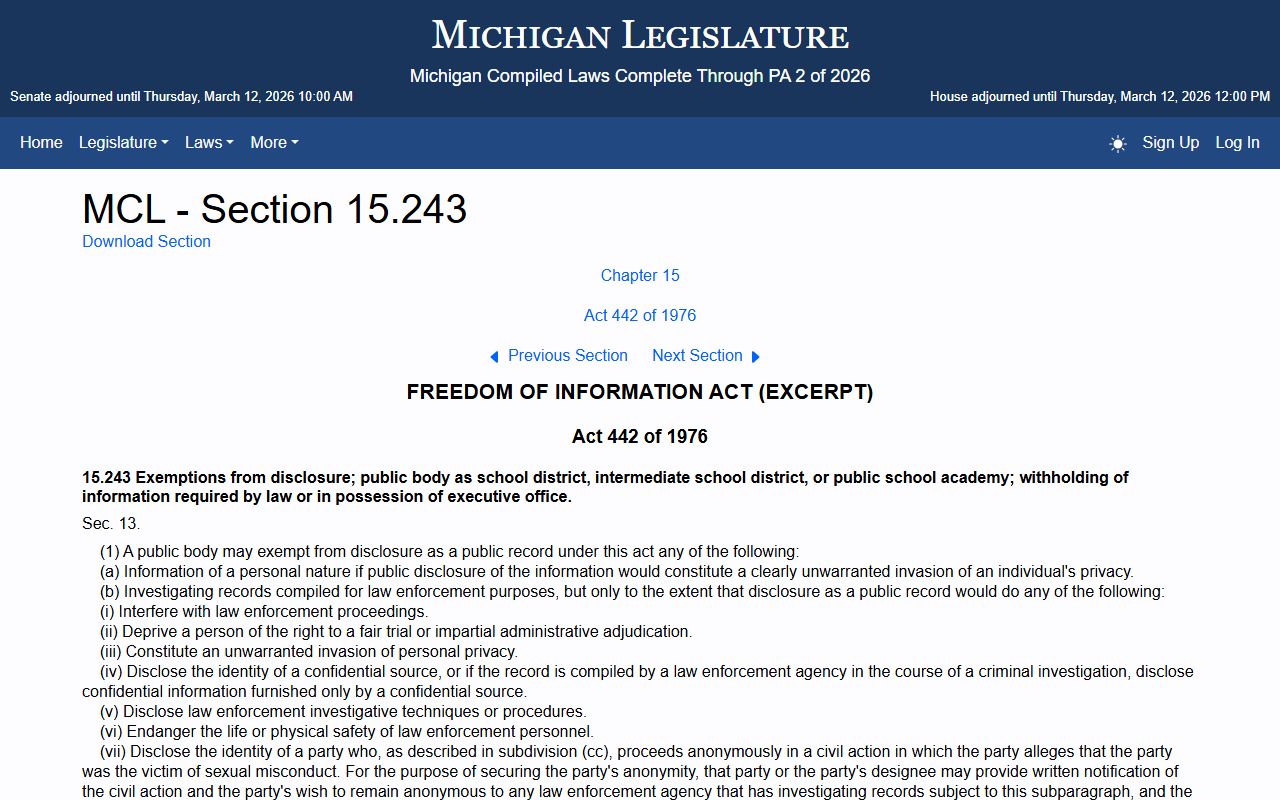
Agencies that withhold records must cite the specific exemption in writing and explain why it applies to the records you requested. A general denial without a reason is not allowed.
Not every police record is public. Michigan FOIA includes broad exemptions for law enforcement under MCL 15.243(1)(b) and (1)(s). These protect active investigations, confidential informant identities, undercover personnel, and operational instructions. They also protect personnel records of law enforcement officers, which is why internal affairs records are rarely available through standard FOIA requests. A major court case, Kent Cty. Deputy Sheriff's Ass'n v. Kent Cty. Sheriff (463 Mich. 353), confirmed that internal investigation records fall under the personnel records exemption.
Privacy exemptions under MCL 15.243(1)(a) may apply to records involving juvenile suspects or crime victims. Ongoing investigations are shielded until the case closes. After a case is resolved, most records become accessible. If your request is denied, you can appeal to the head of the agency. After that, circuit court is an option. A court may also award $1,000 in damages if the agency acted arbitrarily under MCL 15.240.
Offender Tracking and Michigan Police Resources
The Michigan Department of Corrections Offender Tracking System (OTIS) is a free online tool for looking up information on individuals currently incarcerated in or recently released from Michigan state prisons.
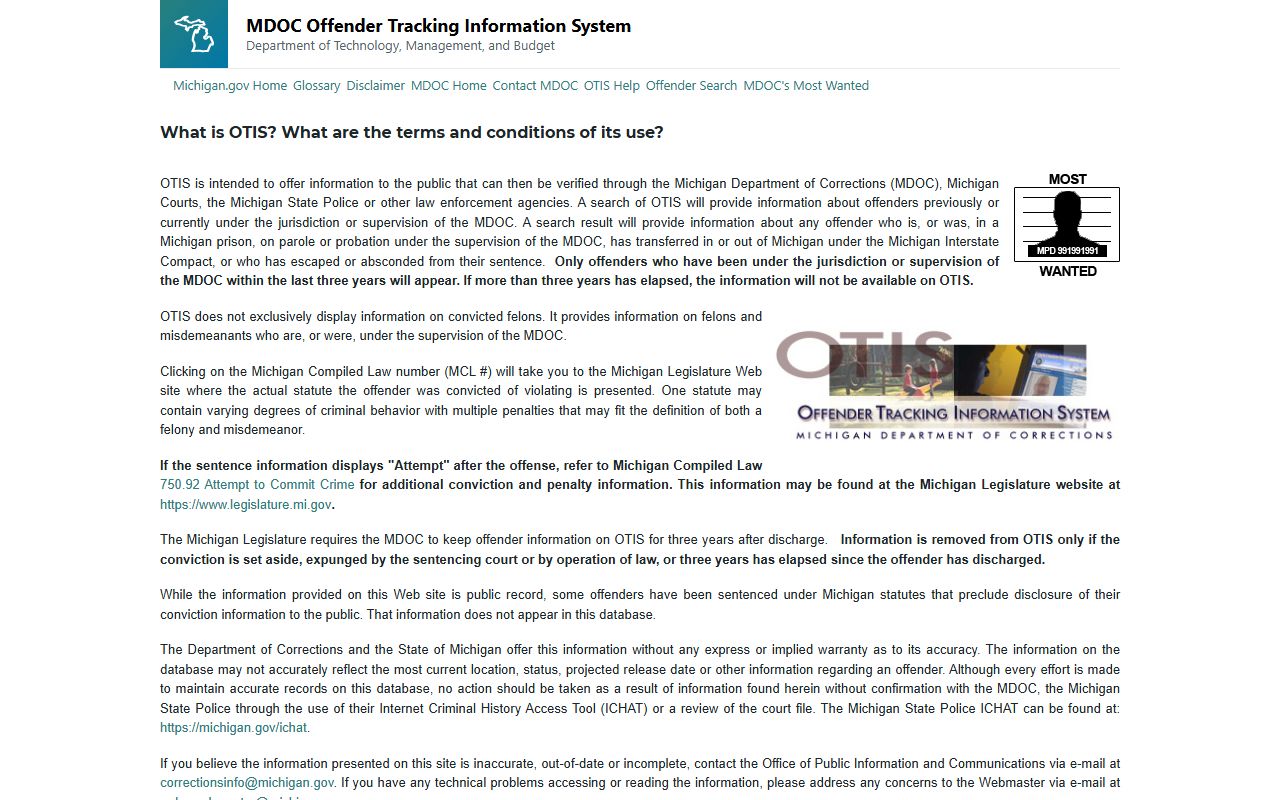
OTIS covers current offenders and those who have been paroled or discharged from state custody, giving you current status, location, and sentence details.
The Criminal Justice Information Center at the Michigan State Police maintains criminal history records and coordinates statewide law enforcement data across Michigan.
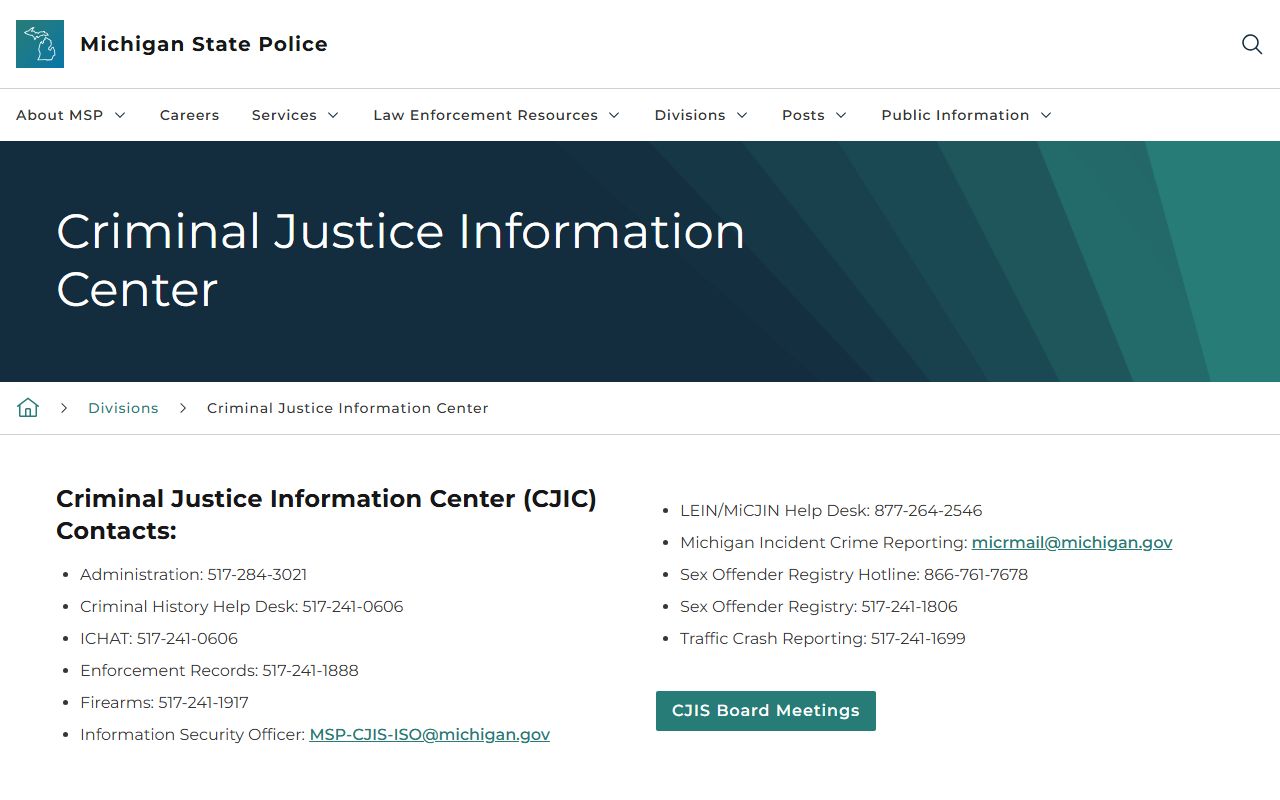
CJIC handles ICHAT, LEIN, the Sex Offender Registry, and Michigan's Uniform Crime Reporting program, all of which feed into public records available under FOIA.
Michigan also maintains a Sex Offender Registry at mipsor.state.mi.us. This is a free public search tool. Search by name, location, or offender type. The registry hotline is (866) 761-7678. For general FOIA guidance and complaints, the Michigan Attorney General's office offers resources at michigan.gov/ag.
Note: The Law Enforcement Information Network (LEIN) is not publicly accessible. It is for law enforcement use only and maintains warrants, protection orders, and criminal history with a full audit trail.
Browse Michigan Police Blotter by Location
Michigan police blotter records are held at the county and city level. Pick a county or city below to find local contact information, resources, and access options for police records in that area.
Michigan Counties
All 83 Michigan counties handle police blotter records through their Sheriff's Offices. Select a county to find local sheriff contact details and FOIA procedures.
Major Michigan Cities
Cities with their own police departments maintain separate police blotter records from county sheriffs. Select a city to find local police department contact info and record access tools.