
Detroit Police Blotter
The Detroit Police Department (DPD) maintains police blotter records and incident reports for all activity across the city's precincts. Detroit residents and the public can request arrest reports, crash records, 911 CAD data, and other documents through the department's records unit or by filing a formal FOIA request. Records are public under Michigan law, though some categories require review by the City Law Department before release.
Detroit Overview
Detroit Police Department
The Detroit Police Department serves Michigan's largest city with multiple precincts spread across the city. DPD handles thousands of calls each year covering everything from minor disputes to serious violent crime. The department's main non-emergency line is (313) 596-2200. For records and reports specifically, call the Records Unit at (313) 596-1909.
The Records Unit is located at the 3rd Precinct, 2875 W. Grand Blvd, Detroit, MI 48202. Office hours vary, so call ahead before visiting in person. The department's official website at detroitmi.gov/departments/police-department lists current hours, precinct locations, and forms needed for common requests.
Detroit is the seat of Wayne County, which has its own court and law enforcement infrastructure. County-level court records and additional criminal history data may be found through Wayne County resources.
How to Request Detroit Police Blotter Records
DPD offers two tracks for getting police blotter records. Routine reports can often be picked up or requested directly through the Records Unit. Non-routine records require a formal FOIA request to the City Law Department.
Routine records available from the Records Unit include:
- Arrest reports
- Incident reports (domestic disputes, assault, theft, motor vehicle accidents)
- Mug shots
- 911 CAD (Computer Aided Dispatch) reports
- Police dash-cam videos
- 911 audio recordings
Non-routine records go through the City of Detroit Law Department. These include reports involving fatal accidents, homicide, narcotics, gang-related incidents, and criminal sexual conduct. These cases require legal review before any documents are released. Submit non-routine FOIA requests to:
| FOIA Contact | Details |
|---|---|
| DPDFOIA@detroitmi.gov | |
| Mailing Address | City of Detroit Law Department, Coleman A. Young Municipal Building, 2 Woodward Avenue, Suite 500, Detroit, MI 48226 |
| Records Unit Phone | (313) 596-1909 |
| Records Unit Address | 3rd Precinct, 2875 W. Grand Blvd, Detroit, MI 48202 |
When submitting a request, include as much detail as possible: a description of the incident, the date and time it occurred, the address or location, and the names of any individuals involved. Incomplete requests may be delayed or denied. The DPD records page at detroitmi.gov and the FOIA page at detroitmi.gov/FOIA provide current forms and additional instructions.
Crash reports typically cost $10, payable by cash or money order in the exact amount. Keep copies of everything you submit.
Online Crime Data for Detroit
The Michigan State Police maintain a statewide crime statistics portal where the public can view crime data by city and county. Detroit's numbers are included in the annual Michigan Incident Crime Reporting (MICR) data. These figures show reported crime counts by type but do not include individual incident details.
For individual case lookups, Michigan courts offer the Michigan Courts Case Search tool, which lets you search criminal and civil case records by name or case number. This is useful for tracking the court status of an arrest or incident. The state's offender tracking system and the ICHAT criminal history tool at apps.michigan.gov/ichat allow background checks for a $10 fee.
The screenshot below shows the Michigan Courts case search portal, which is one way to follow up on incidents that appear in the Detroit police blotter.
The Michigan Courts Case Search portal lets you look up criminal proceedings tied to Detroit arrests.
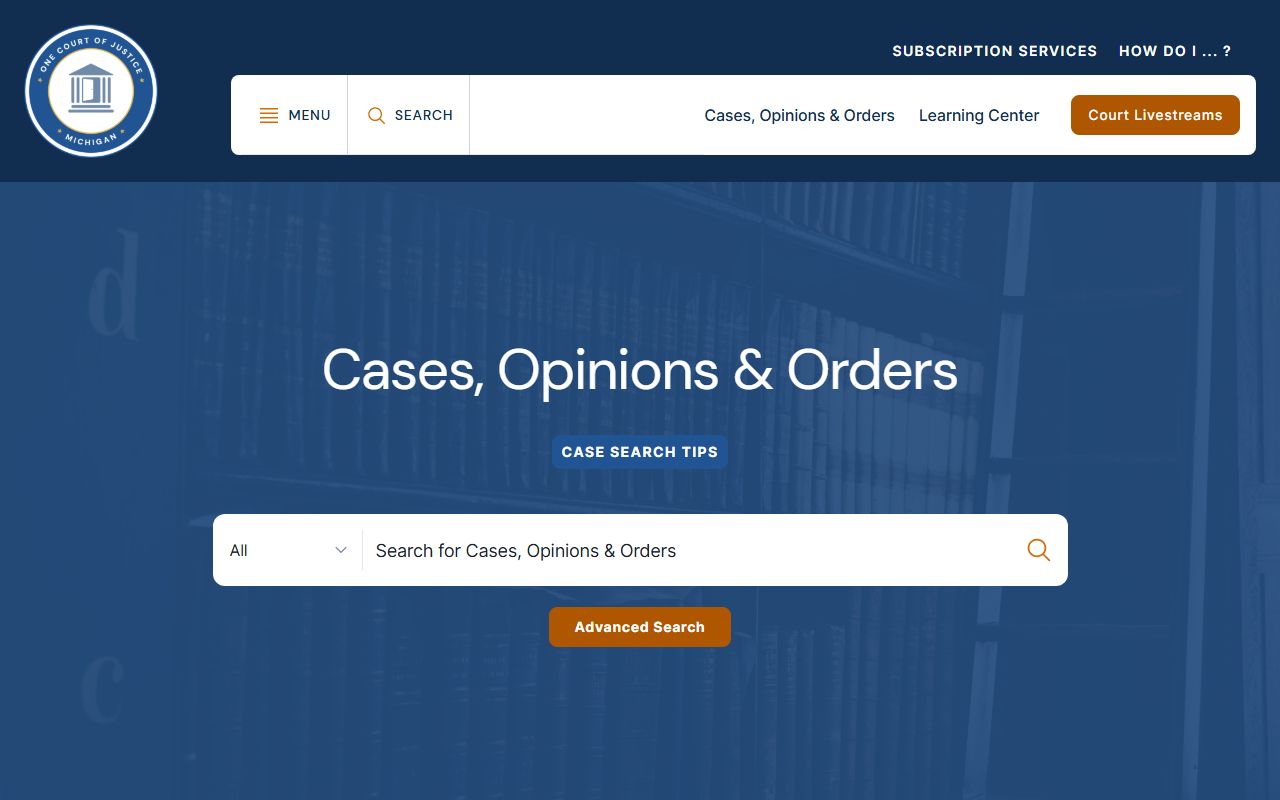
Use the portal to find case numbers, hearing dates, and charges connected to incidents in the DPD blotter.
Michigan FOIA Law and Detroit Records Access
Detroit police blotter records are public under the Michigan Freedom of Information Act. The core statute is MCL 15.231, which states that all public records are open to any person unless a specific exemption applies. Government agencies cannot restrict access based on who is asking or why they want the records.
Under MCL 15.235, a public body must respond to a FOIA request within five business days of receiving it. The agency can grant the request, deny it, or issue a notice of extension if more time is needed. Extensions are limited and must be justified in writing.
Some records are exempt from disclosure. MCL 15.243 lists the exemptions, which include ongoing criminal investigations, personally identifying victim information in certain cases, and some law enforcement operational details. If DPD or the Law Department denies your request, they must cite the specific exemption that applies.
If your request is denied and you believe the denial is wrong, MCL 15.240 gives you the right to appeal. You can appeal internally to the city first, then file suit in circuit court if needed. Courts can order disclosure and award attorney fees if the denial is found to be improper. The full text of the Michigan FOIA Act is at legislature.mi.gov.
Additional Criminal History Resources
Beyond the DPD blotter, several other tools can help you research criminal activity in Detroit. The Internet Criminal History Access Tool (ICHAT) at apps.michigan.gov/ichat provides statewide criminal history for a $10 fee. This covers felony and misdemeanor convictions across Michigan, not just Detroit.
Wayne County also maintains court records for cases heard in the Third Judicial Circuit Court, which handles cases originating in Detroit. You can search Wayne County court records through the Michigan Courts system. For civil court records related to a police incident, the courts portal is the right starting point.
Local news outlets also publish summaries of DPD activity. The Detroit Free Press and Detroit News regularly report on major incidents pulled from police blotter data. These are not official records but can help locate the case number or date needed to file a formal FOIA request.
Related Records and Nearby Areas
Detroit is part of Wayne County. County-level court records, property records, and additional law enforcement data are available through Wayne County.