
Missaukee County Police Blotter
Missaukee County police blotter records cover law enforcement activity in Lake City and the surrounding rural lake district of north-central Michigan. The Missaukee County Sheriff's Office serves as the primary law enforcement agency for the county and processes public records requests under Michigan's Freedom of Information Act for residents and others seeking access to local incident data.
Missaukee County Overview
Missaukee County Sheriff's Office
The Missaukee County Sheriff's Office is the main law enforcement agency for the county. Lake City is the county seat, and the Sheriff's Office serves the surrounding townships and rural communities. The office handles patrol duties, jail operations, civil process, and incident documentation for the entire county outside any incorporated city or village limits.
| Address | 110 S. Pine Street, Lake City, MI 49651 |
|---|---|
| Phone | (231) 839-4338 |
| Website | missakeecounty.net/sheriff |
| Hours | Monday-Friday, 8:00 AM - 4:30 PM |
Missaukee County is a small, rural county in north-central Michigan. The area has many inland lakes and is popular for fishing, hunting, and seasonal recreation. Lake Missaukee is one of the larger lakes in the county and draws summer visitors each year. Seasonal population swings can affect blotter activity, with more calls for service during the summer months when cottages are occupied and recreational traffic increases.
The county is largely agricultural and forested. Most of the population is spread across small townships rather than concentrated in a single urban area. The Sheriff's Office serves all of these areas. Lake City itself is small, with fewer than 1,000 residents, so nearly all law enforcement activity in the county goes through the Sheriff's Office.
Because the county is small and rural, blotter entries often reflect a mix of traffic incidents, property crimes, domestic calls, and outdoor recreation-related reports. Agricultural crimes like equipment theft and trespassing on farm property also appear in blotter logs from time to time.
How to Get Police Blotter Records
To access Missaukee County police blotter records, file a written FOIA request with the Sheriff's Office. Michigan law requires all public bodies to respond to records requests within five business days. Your request does not need a specific form, but it must be in writing.
| FOIA Address | 110 S. Pine Street, Lake City, MI 49651 |
|---|---|
| Phone | (231) 839-4338 |
Describe what you want clearly. Include the type of record, the date or date range, and any details that help identify the specific incident or time period. The agency uses these details to search their records system. A vague request will slow things down.
The office can respond by granting the request, denying it, or extending the deadline. An extension of up to ten additional business days is allowed for complex or voluminous requests. If they extend, they must tell you in writing why. Once approved, you will be notified of any fees before records are provided.
Fees are based on actual labor and material costs under Michigan FOIA. Small requests often result in minimal fees. If you think fees are excessive, ask for a fee waiver. Waivers are available when disclosure serves a public interest and the requester cannot easily afford the cost.
What Blotter Records Tell You
A police blotter is a log of law enforcement calls and incidents recorded over a set time period. In Missaukee County, the Sheriff's Office blotter covers all townships and unincorporated areas. Entries typically show the type of call, the date and time, and the general location.
Common entries in rural county blotters include traffic stops, animal at large calls, welfare checks, trespassing complaints, theft reports, and domestic disturbances. The mix varies by season. Summer tends to bring more recreational incidents. Winter months may see more weather-related accidents and heating-related welfare checks.
Blotter records are different from full incident reports. A blotter entry gives a summary view. A full incident report includes the responding officer's narrative, witness information, and details about what was found and what action was taken. Full reports require a more specific FOIA request and may take longer to process.
Arrest records are also separate. An arrest record names the person taken into custody, the charges, and the booking date. Adult arrest records are generally public. Juvenile arrest records are protected and typically not released. If you need an arrest record for a specific incident, include the date of arrest and the person's name in your request.
For crash reports from county roads, include the date, approximate location, and at least one name involved. Crash reports may carry a copy fee. The Sheriff's Office processes these alongside other records requests.
Online Resources for Missaukee County Records
The Michigan Courts case search portal lets you look up criminal and civil cases filed in Missaukee County courts. The county shares a circuit with Wexford County under the 28th Judicial Circuit.
This state resource helps connect blotter incidents to court outcomes. Search by name or case number to find charges, case status, and hearing dates for Missaukee County matters.
Additional statewide tools:
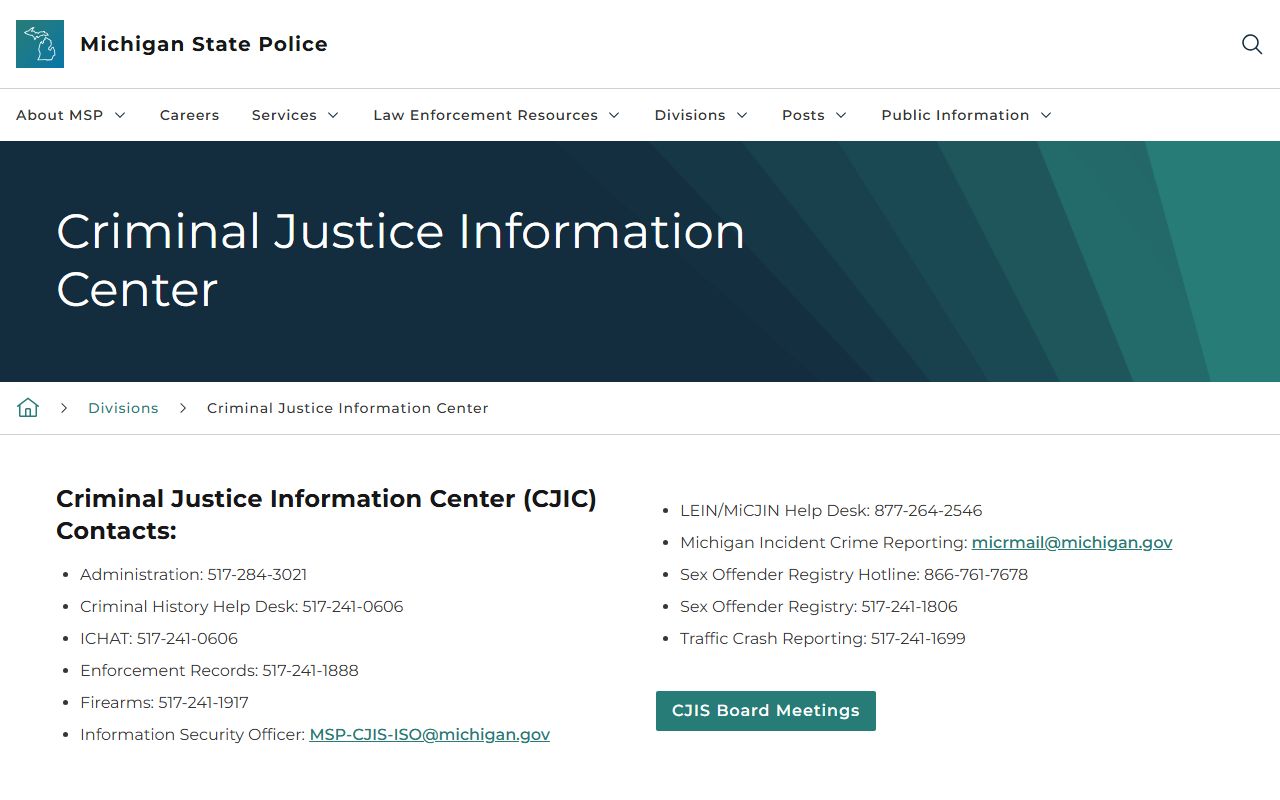
- ICHAT - Michigan's internet criminal history access tool, $10 per name
- OTIS - tracks people in Michigan Department of Corrections custody
- Michigan Sex Offender Registry - searchable by name, zip code, or county
- Michigan Crime Reports - statewide crime statistics by county
For court records specific to Missaukee County, the 28th Circuit Court Clerk can help. The clerk handles felony cases, civil suits, and family court records. Contact the courthouse in Cadillac (where the circuit is based) or the Missaukee County Courthouse in Lake City for local assistance.
Michigan FOIA: What You Need to Know
Michigan's Freedom of Information Act gives residents the legal right to access police blotter records and other government documents. The law is found at MCL Act 442 of 1976 and covers all public bodies in the state.
MCL 15.231 sets up the basic framework. It says public bodies must make their records available for inspection and copying. The default position under Michigan law is openness. An agency that wants to withhold records must point to a specific legal reason for doing so.
Fees follow the rules in MCL 15.234. Agencies can charge for the actual cost of labor to find and copy records. They cannot add a markup or profit from records fees. If you feel fees are inflated, you can challenge them or ask for a waiver.
Exemptions are defined in MCL 15.243. Law enforcement exemptions allow withholding records that would interfere with an active investigation. Privacy exemptions protect personal details of individuals not directly involved. Even when exemptions apply, the agency must release the non-exempt parts of any record, not withhold the entire document.
If denied, ask for a written explanation. MCL 15.235 requires that denial notices cite the specific exemption and how it applies. Under MCL 15.240, you can appeal internally and then to circuit court. Courts can order agencies to pay your attorney fees if the denial was not legally justified.