
Lansing Police Blotter
The Lansing Police Department releases police blotter records covering arrests, incident reports, and crime activity across Michigan's state capital. Residents, researchers, and media can access these records through online portals and formal FOIA requests filed with the department. Lansing maintains one of the more transparent public records programs in the state, with crime mapping tools and annual arrest reports available directly from the city's official website.
Lansing Overview
Lansing Police Department
The Lansing Police Department serves all of Michigan's state capital and is the agency responsible for maintaining police blotter records in the city. As a mid-size urban department, LPD handles a broad range of calls each year, from minor property crimes to serious violent offenses. The department publishes arrest data and crime summaries to keep the public informed.
Lansing saw notable crime figures in recent years. In 2019 alone, the department recorded 983 aggravated assaults, 763 burglaries, 2,225 larceny incidents, 367 motor vehicle thefts, and 12 homicides. Those numbers reflect the challenges facing a city of this size and density. LPD has focused resources on high-crime neighborhoods while working to improve community transparency through open data tools.
| Department | Lansing Police Department |
|---|---|
| Jurisdiction | City of Lansing, Ingham County |
| Website | lansingmi.gov - Police Department |
| Crime Mapping | lansingmi.gov - Crime Mapping |
| Open Data | data-lansing.opendata.arcgis.com |
The department's crime mapping page is one of the better self-service tools in Michigan. It gives residents an interactive map showing recent incidents by type and location. The same page hosts annual department reports and Public Adult Arrest Reports going back to 2022. These arrest logs are some of the most useful police blotter resources the city provides.
Requesting Lansing Police Blotter Records
Most detailed police blotter records in Lansing come through a formal FOIA request. That includes specific incident reports, full arrest logs, officer-involved incident files, and any records not already published online. The Michigan Freedom of Information Act governs all of these requests.
To file a FOIA request with the Lansing Police Department, submit your request in writing. You can send it by mail, email, or in person at the department. Identify the records you want as clearly as possible. Include date ranges, case numbers if you have them, and any names involved. Vague requests take longer to process and may result in broader searches that cost more to fulfill.
Under MCL 15.235, the department must respond within 5 business days. They can extend that by 10 more days if the request is complex. Once approved, they can charge fees to cover the cost of searching, copying, and mailing records. Fees vary based on the volume of records involved. You can ask for a fee waiver if you believe the cost is a burden.
Some records are exempt from release. Under MCL 15.243, law enforcement agencies can withhold records that would interfere with an active investigation, identify a confidential informant, or endanger a person's safety. Juvenile records, certain victim information, and sealed case files also fall outside what you can access through a standard FOIA request.
If your request is denied in whole or in part, you can appeal. First, you appeal within the agency itself. If that fails, you can take the matter to Ingham County Circuit Court under MCL 15.240. Courts can order release of records if the denial was not justified, and they may award attorney fees to requesters who win appeals.
Online Crime Data and Public Reports
Lansing provides more online crime data than most Michigan cities of similar size. The city's Open Data Portal at data-lansing.opendata.arcgis.com hosts downloadable datasets covering calls for service, incidents, and arrest activity. The portal uses ArcGIS and lets users filter and export data in multiple formats.
The Crime Mapping page on the city's main website offers a more visual option. It uses an interactive map that plots recent criminal incidents by type across Lansing neighborhoods. You can filter by crime category, date range, and location. This tool works well for spotting patterns in your area or checking recent activity near a specific address.
The city also publishes Public Adult Arrest Reports for 2022 through 2026. These annual reports list arrests by charge type and help track trends over time. They are available directly from the crime mapping page and do not require a formal records request. Annual department reports provide broader context, including staffing levels and department priorities.
The Michigan Courts case search at courts.michigan.gov is another useful tool. It lets you look up criminal cases filed in Ingham County District Court and Circuit Court. You can search by name or case number. Case records show charges, hearing dates, and dispositions. This gives you a picture of what happened after an arrest that shows up in the police blotter.
Lead-in: Lansing's crime data connects directly to Michigan's statewide court system, as shown in the Michigan Courts Case Search portal.
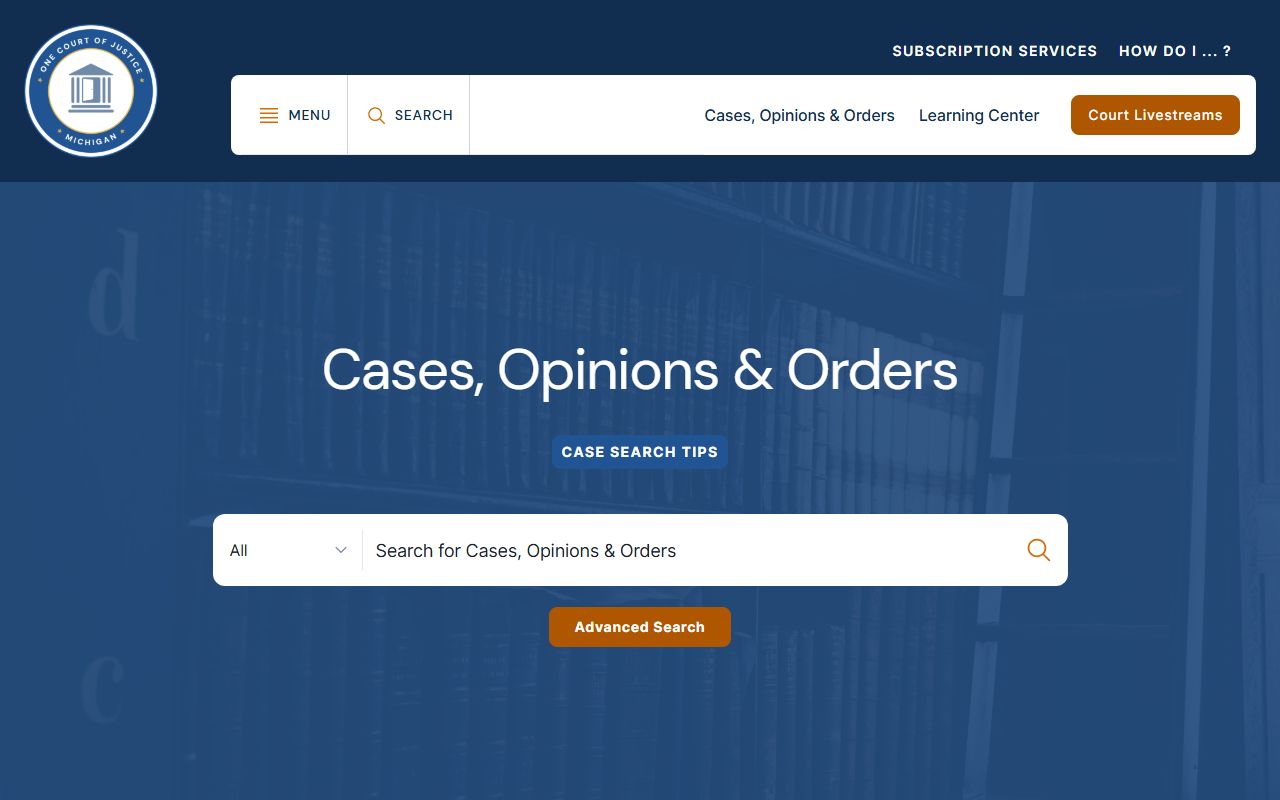
The courts portal covers both district and circuit court cases, making it a strong complement to police blotter data for Lansing criminal records.
Michigan FOIA Law and Your Rights
Michigan's Freedom of Information Act, found at MCL Act 442 of 1976, gives the public the right to access government records including police blotter data. The act covers all state and local agencies, including city police departments. It sets out clear rules for how agencies must handle requests, what they can charge, and what they can withhold.
The law starts with a presumption of openness. Records are public unless a specific exemption applies. Agencies cannot refuse a request simply because the records are inconvenient or embarrassing. The burden falls on the agency to justify any denial. Under MCL 15.231, every person has a right to inspect, copy, and receive copies of public records.
Key exemptions that affect police blotter records appear in MCL 15.243. These include active investigation files, informant identities, and records whose release could endanger someone. Victim information in cases involving sexual assault or domestic violence often carries additional protection. Understanding these limits helps you craft requests that get approved more quickly.
FOIA Tip: When requesting Lansing police blotter records, specify a date range and record type (arrest log, incident report, etc.). Targeted requests get processed faster and cost less than broad open-ended ones.
Fee structures under Michigan FOIA can vary. Agencies may charge for labor, copying, and mailing. They must give you an itemized cost estimate before processing a large request. You can narrow your request to reduce costs. If you believe fees are too high or a denial is not justified, you have the right to appeal. Lansing residents can file appeals with the city and, if needed, take the matter to Ingham County Circuit Court.